Founder story / Post Bridge · Curiosity Quench
JackFriks
How Jack Friks Turned Down $1M for Post Bridge, Then Listed It at $4.2M
Friction-first building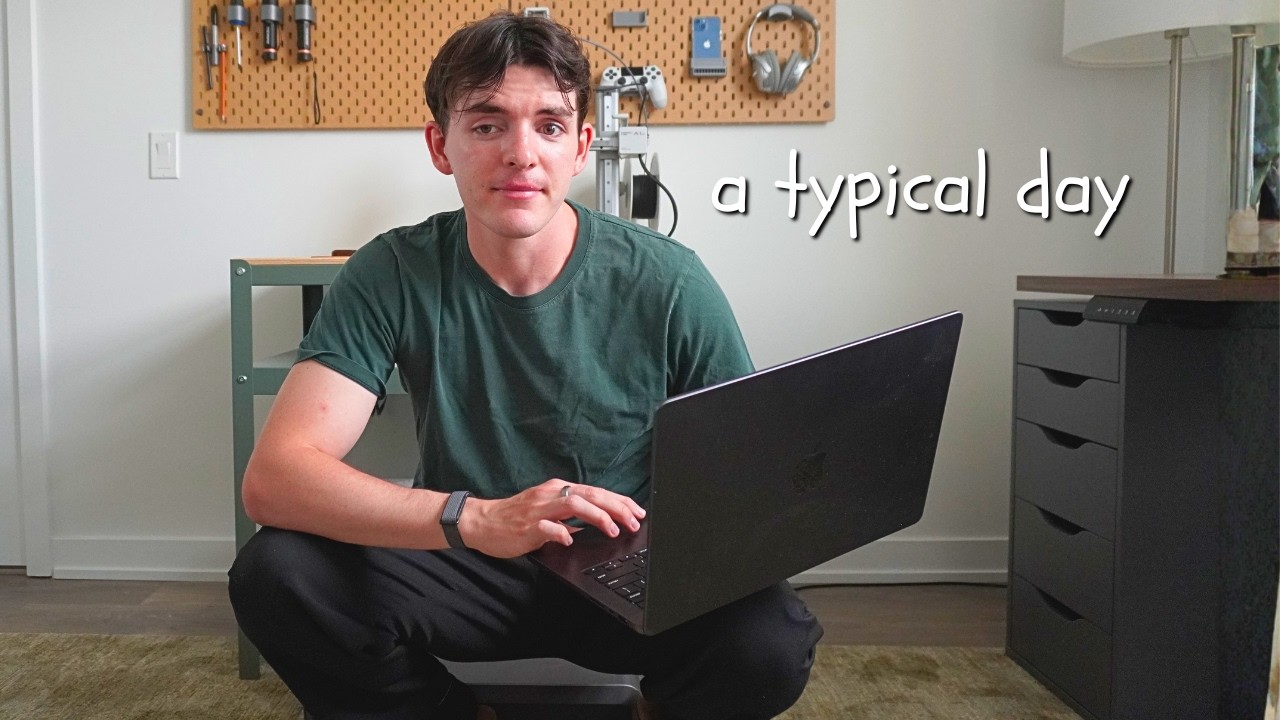
The story in one line
He refused a million dollars, then set the price himself.From a McDonald’s kitchen and a $500,000 crypto loss to a scheduler listed at $4,206,969, this is the dated record behind Post Bridge and the year in the middle where he thought he had made a mistake.
A frozen patty, and a walk where he broke down
“tssssss, the frozen burger patty hits the grill.”
That is the opening line of a newsletter Jack Friks sent on April 15, 2023. He was writing about himself. “For 3 years, this was a large part of my life. From high school to almost all of college, I was in the kitchen at McDonald’s on my extra time making minimum wage.”
Four months later he published another one, titled “How I lost $500,000 at 22 yrs old.” It opens: “Yep you read it right, I lost $500,000 last year as a 22-year-old.”
The money had been real before it was gone. “In 2021 I made an NFT project, it sold out & I made around $300,000 at the time”, he wrote in an earlier newsletter, paid in Cardano. He later wrote that he lost about 99 percent of it.
He had dropped out of his last semester of college to try to make money online. Before he could code, he tried, in his own list: print-on-demand T-shirt designs, affiliate marketing blog posts, “2000+ videos in under two years” on YouTube, and crypto, where in his words “I made money and lost it all”. Four years of it, without clearing $3,000 a month.
Then, in a profile Indie Hackers ran in June 2026, this: “Three months before Post Bridge’s creation, I was on a walk with my now-fiancée and I broke down crying. I thought I was a failure.”
He told the story again on camera for Starter Story, with more of the physical detail: “I used to have headaches and anxiety for like 2 years and it wouldn’t stop... I really thought that like I was peaked at 3,000 with my mobile app and like I didn’t know what to do and then 2 months later, things completely turned around.”
The useful thing here is not the sentiment. It is the timing. The breakdown happened roughly three months before the product that worked, which means the moment of maximum despair and the moment of the correct idea were about ninety days apart, and he could not tell the difference from inside it.
The thing that turned it around was a scheduling tool he built to stop himself from scrolling.
The app that kept making him scroll
Before Post Bridge there was Curiosity Quench, and its entire purpose was to help people stop scrolling on their phones. It reached around 60,000 downloads, most of them, by his own account, from short organic videos he made himself.
To get those downloads he had to post the videos. To post the videos he had to open Instagram, then TikTok, then YouTube, then Twitter, then Bluesky, one at a time, by hand. And every time he opened one of those apps to promote his anti-scrolling app, the feed did what feeds do.
He described the trap plainly to Arvid Kahl on The Bootstrapped Founder: “the reason I made postage [Post Bridge] was because I was trying to promote my anti scrolling app, but I was having to scroll to actually post all these videos because you get sucked into the loop every time you manually manually post.”
His resolution was not willpower. It was software. He describes the result as somewhere he can post without going to “those dreadful suck you in apps, like Instagram and TikTok,” and adds that he no longer opens those apps for months at a time.
The anti-scrolling position was not a launch angle. His own site sells two books, one called Consumption Control, subtitled as a guide to stop scrolling and start living. The newsletter had been arguing the same thing since early 2023. The scheduler is the only one of those that became a business.
Friks explains the contradiction that created Post Bridge
Post Bridge was founded on September 30, 2024. The first offer arrived in under two months.
Three numbers, and the one he set himself
The sequence is not reconstructed. He published it himself, in a post on June 15, 2026: “less than 2 months after launching @postbridge_ i got an offer to buy it for $3,000 then 10 months after launching i got an offer to buy it for $1,000,000 i decided not to accept either offer and for awhile there when growth stalled i thought maybe i made a mistake but in the...”. The public embed truncates the post there.
The million dollar offer has a contemporaneous record. On April 30, 2025, in a routine monthly revenue post, he listed $22,690 across his products and added a line almost as an aside: “@postbridge_ went insane with 688 new customers this month & a $1M casual acquisition offer”. Post Bridge itself was $19,700 of that month.
Turning down a million at that revenue is a bet that the multiple will grow faster than the risk, and for a while, by his own telling, the bet looked wrong. Growth stalled. He wondered whether he had made a mistake.
Then, on March 11, 2026, he set the third number himself. Post Bridge was listed for sale at $4,206,969, a 9.1x revenue multiple, with his own seller note attached: “growing fast, agent friendly, high utility”.
| When | The number | Who set it | Outcome |
|---|---|---|---|
| Under 2 months after launch, so late 2024 | $3,000 | A buyer | Declined |
| April 30, 2025, announced at $19.7k monthly product revenue | $1,000,000 | A buyer | Declined |
| Listed March 11, 2026 | $4,206,969, a 9.1x revenue multiple | Friks | 49 offers received as of the 11 Aug 2026 sync |
Read the June post next to that date and the interesting thing is the ordering. The post is written as vindication, the story of a man who held on and was proved right. It was published three months after the listing went up. And on paper the bet has so far been correct: the asking price is a little over four times the offer he refused. Whether it clears at that price is a different question.
What actually happened to the daily posting
This publication is called Streakr, so the streak deserves a careful answer.
In July 2025 his YouTube channel logged day 48, day 50, and day 52 of daily posting while “trying to build a $1M/year business solo.” Nine days after day 52, on July 18, 2025, he uploaded a video titled “ive been a slave to streaks for the last 5 years of my life.”
The next upload on that channel came 59 days later. Across the thirteen months from July 4, 2025 to August 6, 2026, the channel published fifteen videos in total, eight of which fall in a single two-week stretch in July 2025.
That measures his YouTube channel only. In June 2026, inside the period the channel was quiet, he described his current distribution this way: “For growth, I post my thoughts on X, and I make videos on TikTok and Instagram. I also created dev logs on YouTube for a year.”
Note the tense. The YouTube dev log was a bounded project that he ended on purpose. He did not stop posting. He stopped posting there. A daily video run on one platform ended, deliberately, and revenue continued to climb afterwards. Cadence, in this story, is a tool, not an identity.
The revenue record, and who is vouching for it
The climb is on a dashboard. On his TrustMRR profile, read on August 11, 2026, a Stripe-connected display shows $43,931 in monthly recurring revenue, 1,613 active subscriptions, and $435,152 all-time. The same page shows the pricing the business runs on, Creator at $29 a month, Growth at $49, Pro at $99, and the audience the whole method depends on: 155,450 followers on X, one of the three places he names when he describes how he grows, alongside TikTok and Instagram. It also shows 49 acquisition offers received, a count that is marketplace data rather than anything Stripe vouches for.
| Date | Figure | How it is sourced |
|---|---|---|
| 30 Apr 2025 | $19,700 from Post Bridge in one month | Founder-reported on X |
| 18 Jun 2025 | $18,000 per month | Independent interview, The Bootstrapped Founder 396 show notes |
| 17 Jun 2026 | $50k CAD, about $35,000 USD MRR | Independent interview, Indie Hackers |
| 2 Aug 2026 | $40,000 per month | Founder-reported on camera, Starter Story |
| 11 Aug 2026 | $43,931 MRR, 1,613 active subscriptions, $435,152 all-time | Stripe-connected dashboard display |
The August 2026 figures are the most defensible because they come through a Stripe API connection rather than a screenshot.
One thing belongs in the body rather than a footnote: TrustMRR is built by Marc Lou. Marc Lou and Jack Friks are cofounders of a separate company, Ship or Die, launched on May 7, 2026, which the same site lists with Lou as founder and Friks as cofounder. So the dashboard vouching for Friks’s revenue is built by his business partner, and the sale listing on it carries Friks’s own promotional copy.
That does not mean the Stripe number is wrong. An API-pulled figure is hard to fake and it is corroborated by two independent interviews inside fourteen months. It does mean “third-party verified” is doing less work here than it sounds like, and it means the common description of Friks as a purely solo founder is out of date.
Twenty-three rows, and one of them for sale
His own site keeps the ledger in public: “23 projects · 9 failures · 5 success · ~22% hit rate”. Post Bridge is one row in it.
The habit underneath the ledger is the same one Pieter Levels built a decade earlier with the Open Startup dashboards: put the numbers where anyone can check them, and let the record argue on your behalf. Whoever made those offers did not have to take his revenue on trust. The Stripe connection settled that before the conversation started.
The sale itself is a live event, not a lesson. The asking price is a number he chose, backed by offers whose sizes are not public. Nobody, including him, knows what it closes at.
So the story ends where it stands: a man who spent his high school and college years at a McDonald’s grill now watches acquisition offers accumulate on a dashboard built by his business partner, for a scheduler he made so he would never have to open Instagram to post again. He says he does not open those apps for months at a time. The listing is live. He is not scrolling.
The 60-second summary
The pattern in one sentence: Friks turned a personal friction into a product, then used the product to distribute itself. The part most retellings drop is that he twice refused to sell it, publicly doubted that refusal when growth flattened, and then put a price on it anyway.
The playbook, if you want it. Build for the friction you personally cannot tolerate. Post Bridge exists because manual cross-posting was making him break his own rule, and that is a narrower and more reliable filter than looking for a market gap, because he could feel the problem daily and did not have to guess whether it mattered. Friks’s flinch was opening TikTok; that flinch is product research. Ship the promotion tool as the product: the thing he built to grow Curiosity Quench became the larger business, so the distribution problem and the product were the same object. Post the numbers monthly, including the flat ones: the April 2025 revenue post is a routine format, not a victory lap, which is why a seven-figure offer shows up in it as a bullet point. Keep the failures in public and numbered; a ledger of failures against successes is a stronger credibility asset than a highlight reel, and it costs nothing to maintain. And let a cadence end when it has done its job. He ran a daily video experiment, said publicly that streaks had owned him for five years, and stopped that one. The business kept growing.
What you cannot copy. The four years came first, and they were genuinely bad: two thousand YouTube videos, print-on-demand, affiliate blogs, a crypto win and the loss that followed. By the time Post Bridge existed he had already run through most of the ways this goes wrong, on his own time, and had built an audience while doing it. The product looks like an overnight success because the four years are not on the chart. The timing of the market is not reproducible either: a cross-posting scheduler in late 2024 landed in a moment when posting the same short video to five platforms had become a routine cost of being a solo founder, which is exactly the cost he had been paying by hand for Curiosity Quench. That window was real and it was not his doing. And if you are in the flat part yourself, note the date: Friks broke down crying roughly three months before the idea that worked, and could not tell from inside it that he was close. Nothing about that guarantees you are close too. It does mean the feeling and the evidence are different things, and only one of them belongs in the decision.
The dated record, end to end
The kitchen, then the exit from college
Three years working at McDonald’s, in his words “from high school to almost all of college”. He drops out of his last semester to try to make money online.
A crypto win, then a $500,000 loss
“In 2021 I made an NFT project, it sold out & I made around $300,000 at the time”, paid in Cardano. He later writes that he lost about 99 percent of it. A separate post puts a $500,000 loss at age 22, which he describes in August 2023 as having happened “last year”.
The newsletter starts
“frik it filosophy” begins on Substack. It runs to 106 posts and stops on 23 May 2024.
An anti-scrolling manifesto, and a crash bug
“Becoming a non-scroller” lays out the argument while mentioning four days lost to a release-build crash in his app.
Curiosity Quench grows on organic video
The anti-scrolling app reaches roughly 60,000 downloads, driven by short videos he posts by hand across five or more platforms.
Post Bridge is founded
The founding date and Canadian location later appear on a Stripe-connected dashboard.
The $3,000 offer, declined
Under two months after launch, a buyer offers $3,000.
The $1,000,000 offer, declined
688 new customers in a month, $19.7k from Post Bridge, and a casual seven-figure offer mentioned in passing.
$18k per month, in an independent interview
Arvid Kahl publishes episode 396. Friks describes an anti-AI, anti-bloat product philosophy.
The daily video run, and a public doubt about it
His channel logs day 48, day 50, and day 52. Nine days after day 52 he posts “ive been a slave to streaks for the last 5 years of my life.” It is his last upload for 59 days.
Post Bridge is listed for sale
Asking price $4,206,969, a 9.1x revenue multiple.
$35k MRR, and four years of failing first
An Indie Hackers profile reports $50k CAD, about $35k USD, and his account of four years struggling to make money online.
$43,931 MRR, Stripe-connected
The dashboard displays MRR, $435,152 all-time revenue, 1,613 active subscriptions, and 49 acquisition offers received.
Sources and evidence notes
How this edition was reported. Both newsletter quotations in the opening section are the public preview text of subscriber posts on his own Substack, read on August 11, 2026. The offer sequence is his own X post of June 15, 2026, quoted to the point where the public embed truncates it. The asking price and offer count are taken from the listing section of his TrustMRR profile, and the revenue figures come from the Stripe-connected section of the same page. That profile is live and its counters move, so every figure taken from it is stamped to the August 11, 2026 sync. A Stripe connection verifies that payments happened; it does not make the figure audited, and it does not cover refunds, chargebacks, or costs, so displayed revenue is not profit. The dashboard’s last-30-day snapshot shows revenue down 9.7 percent while MRR is up 1.6 percent; those move in opposite directions when one-time payments fall but subscriptions hold, which is a reasonable thing to see in a business that is being shopped, and a small sample.
What we could not verify
- First-party pricing. Creator $29, Growth $49 and Pro $99 are read from the TrustMRR profile. post-bridge.com is behind a Vercel bot checkpoint that returned HTTP 429 to every attempt on August 11, 2026, so the prices are not confirmed on the company’s own site.
- The date of the $1,000,000 offer. He describes it as arriving “10 months after launching”. The contemporaneous announcement is dated April 30, 2025, about seven months after the September 30, 2024 founding date on the dashboard. We print both rather than pick one.
- What the offers were worth. The listing states 49 acquisition offers received. No amount, buyer, or status is public for any of them, and an asking price is not a sale price.
- Whether the on-camera Starter Story quote is still retrievable. The video and its date are confirmed, but its captions could not be re-downloaded on August 11, 2026, so that quotation rests on a transcript taken at first reading rather than a same-day re-check.
- The contents of the “slave to streaks” video. No transcript could be retrieved, so this edition cites its title and date only and does not characterise its argument.
- Net worth. No verified figure exists. We did not estimate one.
A note on method. The newsletter count in this edition, 106 posts between February 19, 2023 and May 23, 2024, comes from paginating the Substack archive API behind and deduplicating by post ID. The HTML archive page returns only the most recent screen, and reading it directly produced several different wrong answers before the API settled it. 59 of the 106 posts are public and 47 are subscriber-only; the two quoted in the opening section are subscriber posts whose public preview text carries the quoted lines.
A note on the X sources. Posts are quoted from the publisher oEmbed endpoint, which returns author, verbatim text and date without authentication, and each post date is independently confirmed by decoding the numeric ID.
Relationship disclosure. TrustMRR, the dashboard used as the primary revenue source in this edition, is built by Marc Lou, who is a cofounder with Jack Friks of a separate company, Ship or Die. This is stated in the body where the dashboard figures first appear and repeated here.
- TrustMRR, Post Bridge profile, Stripe-connected display, fetched 11 August 2026.
- jack friks on X, 15 June 2026, the $3,000 and $1,000,000 offers.
- jack friks on X, 30 April 2025, monthly revenue and the casual $1M offer.
- The Bootstrapped Founder, episode 396, Arvid Kahl, 18 June 2025, official transcript.
- Indie Hackers, James Fleischmann, 17 June 2026.
- Starter Story, “How I Work: $40K/Month Solo App Builder”, 2 August 2026.
- jackfriks.com, the founder’s own site, fetched 11 August 2026.
- “McDonalds employee gets rich in Crypto then loses it all...”, 15 April 2023.
- “How I lost $500,000 at 22 yrs old”, 12 August 2023.
- “Becoming a non-scroller”, 13 February 2024.
- Jack Friks YouTube channel feed, verified 11 August 2026.
- TrustMRR, Ship or Die profile, showing Marc Lou as founder and jack friks as cofounder.
- “frik it filosophy”, the founder’s newsletter archive, counted via its public API on 11 August 2026.
- The Bootstrapped Founder, episode 396 show notes, the source of the $18,000 per month figure.
- “Key Lessons for anyone wanting to make their own NFT project”, 21 March 2023, the source for the 2021 crypto win.