Founder story / Nomad List · Remote OK · Photo AI · Interior AI
PieterLevels
How Pieter Levels Turned Public Shipping Into a Feedback System
Public shipping loops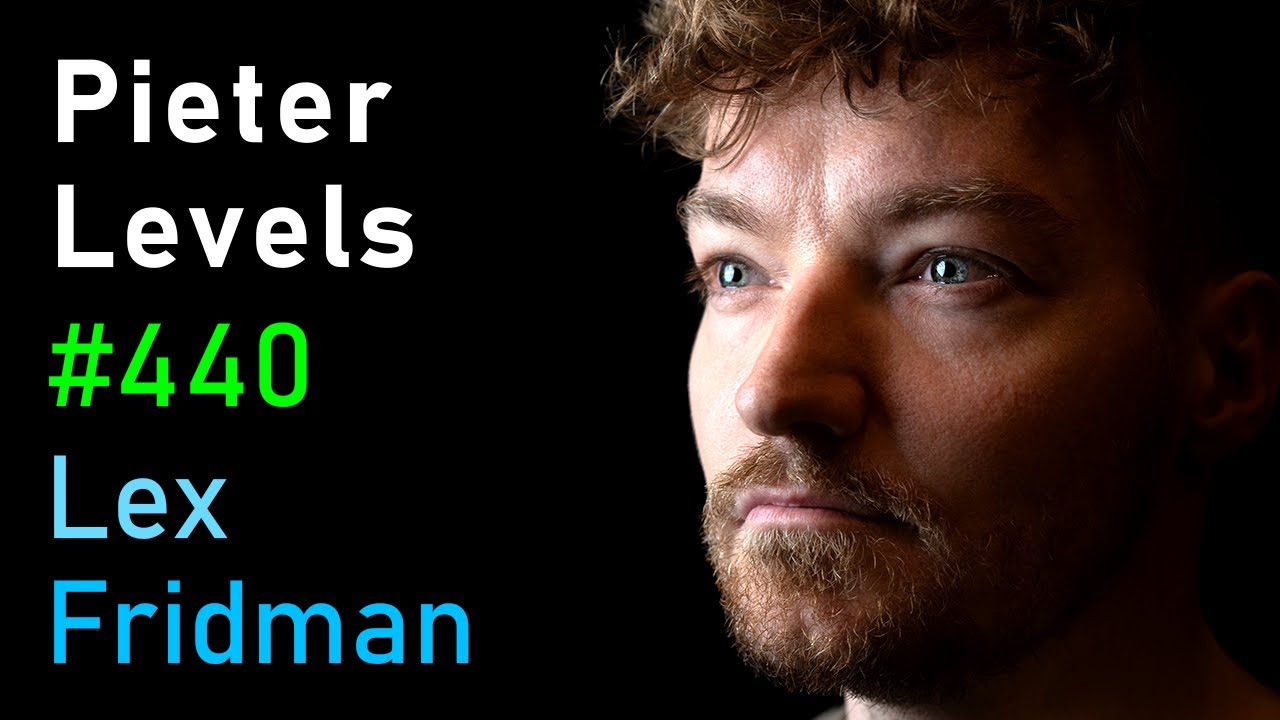
The story in one line
Make the work visible early enough for the market to change it.From a 2014 public ultimatum to open dashboards and AI demos, this is how public artifacts became a one-person company’s feedback system.
Twelve months, twelve chances to fail
On March 1, 2014, a Dutch developer living out of a backpack published a blog post with an ultimatum to himself: launch 12 startups in 12 months, one per month, or fail in public. The post is still up today, receipts and all. Its title reads “I’m Launching 12 Startups in 12 Months,” and in the fourth position sits the project that would carry everything after it.
Project #1 was Play My Inbox, the useful failure at the beginning of the story. It got press and users but never made a dollar because, as Levels remembered it a decade later in conversation with Lex Fridman, he had not installed a payment button. The launch proved that he could attract attention. It did not prove that anyone would pay.
That distinction shaped the system that followed. A public launch creates a deadline. A demo gives people something specific to discuss. A payment path asks a harder question than likes or page views. Pieter Levels had announced the deadline, the rules, and the scoreboard before he knew which idea would survive. The audience could watch the list fill in. Failure was no longer a foggy feeling at the back of his mind. It had a date and an empty row.
Project #4 was a crowdsourced spreadsheet of cheap cities with good wifi. Levels has described typing city data into a public spreadsheet and sharing it on Twitter. Other people added to it. He converted the useful artifact into a website, and the website became Nomad List. People did not need to understand a founder narrative before they could use it. They could inspect a city, add information, or share the sheet. The artifact carried its own reason to travel.
In the 2024 interview, Levels said making the challenge public created accountability. The lesson is less glamorous than “build an audience.” It is more useful: put unfinished market evidence where people can touch it.
Pieter Levels on the long loop
A portfolio, not one perfect bet
Five months into the challenge, the experiment had become visible beyond Levels’s own channels. WIRED reporter Klint Finley found him in the Philippines, building from coffee shops with no fixed address. The August 27, 2014 story described Gifbook as project five, called Nomad List his most successful product at that point, and challenged the loose use of the word “startup” for what were often small market tests. The portfolio was already attracting both attention and skepticism while the monthly clock was still running.
What survived the challenge grew into a portfolio. Nomad List, now presented at Nomads.com, helps people compare places and participate in a remote-work community. Remote OK connects employers with remote job seekers and charges employers to post roles. Photo AI sells AI-generated photos and videos. Interior AI turns room images into redesigned spaces. MAKE sells the operating knowledge itself. Each product has a different job, but they share a founder-controlled path from demonstration to checkout.
Levels frames this as a one-person-company identity, not as a venture-backed startup trying to hire into every function. “I don’t really raise money. I don’t use VC funding, I do everything myself...” he told Fridman, going on to describe doing design, development, and branding himself.
This constraint shapes the portfolio. Familiar tools reduce the cost of beginning. Self-service checkout reduces the cost of selling. Automation reduces the cost of keeping a winner alive while the founder starts the next experiment. A project does not need to become a giant organization to remain useful or profitable. It needs a narrow promise, a working route to payment, and operations that fit inside the company he wants to run.
The stack serves the same constraint. Levels named PHP, jQuery, SQLite, VS Code, and an earlier use of Sublime Text in the 2024 interview, and he has also discussed a MacBook and direct Stripe payment tests. The exact stack varies by product and year, so copying vendor names misses the reason they matter. Familiarity lowers translation cost between idea and artifact. For a one-person company, every unfamiliar dependency creates another place to stop. A known language helps him ship. A simple database can postpone infrastructure work. A direct payment path tests demand.
When the business became a public dashboard
By 2018, the public loop included an “Open Startup” dashboard for Nomad List: the company scoreboard as a live page anyone could open. The Wayback snapshot dated May 15, 2018 displays Monthly Revenue, Total Revenue of $764,074, Revenue Last 12mo of $290,741, and an estimated month of $43,240.
A December 10, 2019 snapshot says revenue was verified by Stripe, Indie Hackers, and ChartMogul, and displays Revenue Last 12mo of $290,058/y and Total Revenue of $1,240,414. A January 4, 2021 snapshot repeats the verification language and displays $348k/y toward a $500k/y goal, Net profit margin of 80.55%, Revenue Last 12mo of $338,827/y, and 34,772 Twitter Followers.
The dashboard turned business operations into a recurring content object. Visitors could see a moving target instead of waiting for a retrospective. Revenue, profit, goals, and audience size made the company feel observable, and every milestone arrived with a natural distribution hook. The current route remains available at, though its contents can change.
Around 2018, Levels packaged the method in MAKE. The official page describes a book of more than 200 pages and 50,000 words, organized around seven stages: idea, build, launch, grow, monetize, automate, and exit. An idea is selected for a problem, not novelty. Building stays narrow enough to finish. Launching exposes the artifact. Growth takes it to people who already feel the problem. Monetization asks for commitment. Automation protects a one-person operation from repeated labor. Exit is an option, not the assumed destination.
The Dojo Bali talk is effectively the spoken outline. It gives the framework a voice and shows how Levels narrates a portfolio of experiments: practical stages, familiar tools, direct sales, and systems that stay small enough to control.
The seven-stage MAKE framework
The book is also proof that the loop can create a product from operating knowledge. Building companies generated a method. Publishing the method built a new revenue line. Teaching fed attention back toward the products and founder identity.
The failed artifact belongs to the record too. Levels’s projects page displayed 113 entries on June 29, 2026, classified with his own labels: 9 Success, 11 Okay, 19 Failed, 68 N/A, and 6 New. The ledger corrects the easy myth that one prolific founder simply chooses winners. The visible winners sit on top of many attempts that did not become businesses.
The loop replays in the AI era
The AI products look new, but their operating pattern is familiar. In an Arvid Kahl interview published October 25, 2023, Levels explains how Interior AI began. The origin is another fast response to a visible capability: take an emerging technology, wrap it around a legible use case, show the result publicly, and learn from demand.
Photo AI added creator distribution to the loop. He told Kahl that one TikTok influencer took Photo AI monthly recurring revenue from $12,000 to $40,000 or $50,000 and that it stayed there. The strategic value lies in the shape of the event: a visual product created shareable outputs, a creator demonstrated it to a fitting audience, and the business retained more demand after the spike. In the same conversation he said his goal was to reach $100,000 in monthly recurring revenue across Photo AI and Interior AI. The statement reveals portfolio thinking. The products can share an audience, technical learning, distribution formats, and founder account without needing to become one product. A demo for one teaches the audience what kind of maker they are following. A lesson from one can shorten the next build.
X is now the front door. On August 10, 2026, a browser observation of @levelsio showed 929.5K followers, 178.1K posts, multiple posts and replies from the same day, and revenue claims written directly into the profile: $89K/m for PhotoAI, $27K/m for InteriorAI, $16K/m for Nomads, and $6K/m for MAKE. The public scoreboard survived into the AI era, compressed into a bio.
The formats are unusually close to the work. He posts product demos that show an outcome, screenshots that compress a build into an image, launches that give followers a reason to try something now, and replies that turn individual questions into public product conversation. Travel and personal observations keep the account wider than a company feed.
The owned blog still does a different job. It keeps the original argument and the project ledger accessible after a social post disappears down the feed. Product pages convert attention into use or payment. Interviews and talks provide long-form explanation. Giving each surface one job creates a path. Asking every channel to do every job produces noise.
The list is still filling in
The format changed across twelve years: blog post, dashboard, social feed. The job stayed similar: make the latest build, signal, or number easy to see. Build in public works here because it shortens the distance between an assumption and an observable response. Content is the transport layer, not the product.
The archive compounds. Each retained launch teaches new readers how to interpret the next one. Each working product makes the next demo more credible. Each admitted failure lowers the cost of trying again in public. Over time, the archive becomes distribution infrastructure.
And the 2014 page still loads: the title, the date, the monthly plan, Nomad List in the fourth position. A dozen years on, the developer who typed city data into a public spreadsheet is doing the same thing at larger scale, putting unfinished market evidence where people can touch it, one artifact at a time, with the scoreboard showing.
The 60-second summary
Here is the pattern in one sentence: Levels makes the work visible early enough for the market to alter it. The durable asset is not a posting streak. It is a chain of public artifacts, working products, customer signals, and retained results.
The playbook, if you want it. Shrink the first promise until one person can expose it to reality, then build the smallest artifact that demonstrates it. The original rule gave an idea one month, which forced Levels to prefer a tool he could ship over a system he might someday perfect. Capture the thing itself: a screenshot beats a vague progress update, a live spreadsheet beats a manifesto about travel data, a short demo beats an explanation of what a product might do. Publish where response can arrive, and add the commitment path before you announce. A payment path separates interest from commitment, and ten compliments are not a substitute for one qualified action. Then record the result and let it change the next build: continue a product with useful demand, alter one that attracts the wrong behavior, stop one that earns only applause, and automate a task only after repetition proves that the task exists.
What you cannot copy. You cannot start with an audience approaching a million followers. You cannot recreate 2014’s digital nomad timing, the novelty of a public spreadsheet, or the exact wave of generative AI. You cannot import a founder’s appetite for public failure, years of technical familiarity, accumulated product links, or relationships with creators. The largest survivorship trap is staring only at Nomad List, Remote OK, and the AI winners: his own project ledger contains many items labeled Failed or N/A. The method is not a machine that makes every launch work. It is a machine for producing more bounded attempts, learning faster, and preserving enough upside when one catches. The transferable advantage is not fame or timing. It is the habit of turning work into a testable artifact, asking for commitment, and allowing the result to end an idea.
The dated record
The public bet
Levels announces 12 startups in 12 months and promises a monthly idea, build, and launch cycle. The current page retains the project list.
Nomad List starts as a sheet
A crowdsourced list of cities becomes project four and then a working website. This is the clearest early example of participation guiding the build.
Jobs become a business
The challenge page lists NomadJobs and then Remote OK. The latter evolved from an aggregator into a product that sells employer job postings.
MAKE packages the method
The book and Dojo Bali talk organize the process into idea, build, launch, grow, monetize, automate, and exit.
Open Startup dashboard
An archived public dashboard displays monthly and total revenue fields, making the business scoreboard part of the public artifact.
Verification language appears
An archived snapshot says revenue is verified by Stripe, Indie Hackers, and ChartMogul while displaying annual and total figures.
Profit and audience join the board
The archived dashboard displays a revenue goal, net profit margin, last-12-month revenue, and Twitter follower count.
AI products replay the loop
Interior AI and Photo AI move from public experiments to products promoted through demos, creator distribution, and visible revenue updates.
X is the live feed
A browser sample shows same-day posts and replies, product claims in the profile, and an audience of 929.5K followers.
Sources and evidence notes
How to read the numbers in this edition. The revenue figures, dashboard displays, and profile claims above are founder-published records, not audited financial statements. The archived Open Startup snapshots establish what Levels publicly displayed at specific dates; the “verified by” language on those pages tells us how the dashboard represented its data connections, nothing more. The Photo AI influencer figures, the $100K MRR goal, and the 2026 profile lines are Levels’s own accounts of performance. The X profile reading is a point-in-time observation, not a claim about a precise sustained posting cadence, and the evidence does not support assigning a measured acquisition share to Hacker News, Reddit, or any other community. The funding quote is a claim about his funding and operating identity, not evidence that no contributor, vendor, moderator, or partner has ever touched a product: customers contribute data and feedback, platforms provide infrastructure, and contractors or partners may exist without appearing in the reviewed record. MAKE is described as published in 2018 because testimonials on the official page date to 2018; a living sales page can change, so the current page is not treated as an immutable first-edition record. The projects ledger uses Levels’s own subjective labels. The playbook paragraph in the summary is Streakr’s replication analysis of the observed operating principles, not Levels’s claimed schedule or a promise of similar results.
- 2014 challenge page, verified page contents. Pieter Levels, page displays March 1, 2014; accessed August 10, 2026. Open source. Supports the title, stated monthly plan, and current project ordering. A living founder page does not authenticate every historical edit.
- Remote OK, verified current product page. Accessed August 10, 2026.. Supports the current employer posting model.
- Lex Fridman interview, founder-reported. Published August 20, 2024; accessed August 10, 2026. Transcript and. Used for attributed accounts of the challenge, tools, monetization, funding, and working style. The funding quote appears at 00:02:14. The transcript warns that it may contain errors.
- Nomads FAQ, founder-controlled product source. Accessed August 10, 2026.. Supports the crowdsourced spreadsheet origin and current product description.
- Projects ledger, founder-defined labels. Displayed update date June 29, 2026; accessed August 10, 2026.. Supports visible entries and classifications, not audited outcomes.
- Dojo Bali talk, primary founder presentation. Published on YouTube January 24, 2018.. Supports the seven-stage framework.
- Open Startup snapshot, archived public display. May 15, 2018.. Supports the labels and figures displayed on that snapshot only.
- Open Startup snapshot, archived public display. December 10, 2019.. Supports displayed revenue and verification language only.
- Open Startup snapshot, archived public display. January 4, 2021.. Supports displayed revenue, margin, goal, follower count, and verification language only.
- MAKE official page, founder-controlled product source. Accessed August 10, 2026.. Supports the current description of 200+ pages, 50,000+ words, stages, and 2018-era testimonial evidence.
- Arvid Kahl interview, founder-reported. Published October 25, 2023.. Relevant passages: Interior AI origin at 00:07:36 to 00:08:08; Photo AI influencer and MRR account at 00:12:51 to 00:13:24; combined $100K MRR goal at 00:41:19.
- @levelsio X profile, direct browser observation. Observed August 10, 2026.. Supports the point-in-time follower and post counts, same-day activity, visible formats, and profile claims. It does not establish a sustained cadence or verified revenue.
- WIRED, independent contemporaneous reporting. Klint Finley, August 27, 2014. Read the report. Reports from the challenge while it was underway, including the fifth project, location, one-person operation, outside-investment context, and criticism of calling each market test a startup. Founder quotations inside the story remain attributed claims.
Evidence tiers used throughout: “Verified fact” means directly observed in a primary or archived artifact. “Founder-reported” means Levels said or displayed it. “Streakr analysis” is our interpretation. A source can be direct evidence that a claim was displayed without verifying the underlying business figure.
Published: August 10, 2026. Research last checked: August 10, 2026. Corrections: read the corrections policy or email corrections@streakr.co with a source.