Founder story / Bannerbear · Previewmojo · Talkshow
JonYongfook
Jon Yongfook Launched Seven Startups. Bannerbear Came After He Stopped
Explore, then focus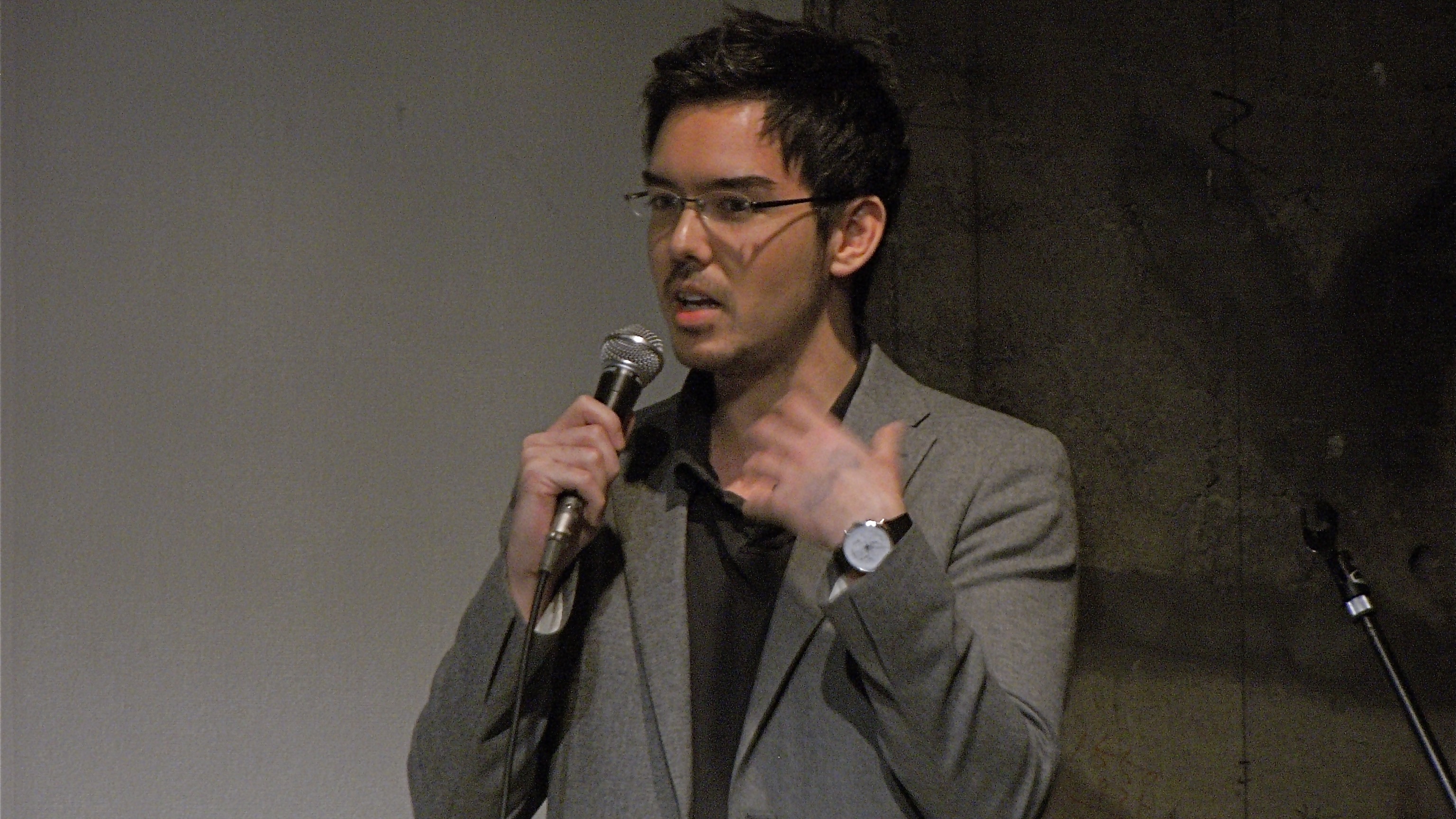
The story in one line
The durable company appeared after the launch challenge ended.A year of rapid releases rebuilt his shipping muscle, but Bannerbear took shape only after burnout, a failed video product, early sales without durable demand, and a turn from maker applause toward repeated customer use.
The blank slate
In July 2018, Jon Yongfook Cockle left Aviva in Singapore with no product waiting at home. He had deliberately refused even to plan one while employed. The corporate job had consumed his days, his contract restricted outside work, and he feared that preparing a business before leaving might return to hurt him years later. So he began with savings, a clear calendar and, as he later told Courtland Allen, “literally a blank.”
On September 3 he gave that blank a deadline. He would launch a startup every month for a year. The point was not to discover a perfect idea in his head. “The ability to launch products is a muscle that you need to exercise,” he wrote in the announcement. After years away from launching, his own had atrophied. The challenge would be an “anti-MBA”: build, release, listen, repeat.
The first product was Zipsell, an open-source store for digital downloads. Promomatic made app-store artwork. Montage assembled mobile wireframes. Tech Jobs Asia listed regional jobs. Hyperjump targeted financial institutions. Tropic displayed remote-team time zones. Coconuts Singapore named all six in a contemporaneous profile on March 16, 2019. Then came Talkshow, a video discussion board for remote teams.
Seven products appeared. The promised dozen never did.
The portrait above shows Jon at the Tokyo 2.0 event in November 2008, a decade before this story begins. Photograph by ami harikoshi, cropped to 16:9 and used under CC BY 2.0. It is historical context, not a current likeness.
The applause trap
By New Year 2019, the challenge looked successful from the outside. Jon wrote that three of the first four launches had become Product Hunt's number-one product of the day. Inside, he was unhappy. In a January 7 realignment post, he admitted he had been “a little too seduced by Maker culture.” Makers supplied immediate praise, but they were a narrow market. The launches were training his release reflex while letting him postpone the harder question: would enough customers come back and pay?
Jon later summarized the challenge as producing no direct revenue and no revenue model. His contemporaneous record says otherwise: the January 2019 post reported “a stream of early revenue” from the first four launches, and his December acquisition post said Promomatic had generated revenue from day one. The defensible failure was not that every product was unpriced. It was that early sales and launch attention had not yet become durable repeat demand. In the 2021 Indie Hackers interview, he said putting a price on an idea felt like personal rejection, so he had subconsciously avoided it. Years later, on camera with Ahrefs, he gave the physical cost of the pace: “I pretty much burnt out at about number six.”
The challenge, reconsidered six years later
Talkshow made the distinction unavoidable. On September 10, 2019, Jon announced its death after four months without revenue and a pivot that had failed to move the metrics. Signups had produced attention, but fewer than one in a hundred users made a video. His verdict was cleaner than a growth experiment: “That’s not really ‘room for improvement’ territory, that’s ‘my product hypothesis was wrong’ territory.”
He closed the thread with a promise to himself: “Think niche, think APIs.”
One thread worth pulling
The shutdown did not immediately reveal Bannerbear. Jon took time away, then returned to the part of the experiments that still held his attention: automated image generation. It connected to an old pain. At an ecommerce company, his design team had manually converted each new product photograph into a conveyor belt of banner sizes and messages. He wanted the self-serve API that had not existed for them.
The next tool was Previewmojo, a narrow generator for social and open-graph images. This time it had a price. Some customers paid. The signal was modest, but it was different from launch-day applause because money and use survived the announcement.
In January 2020 he renamed it Bannerbear. The rebrand renewed interest without producing many sales, and the product still solved too small a fragment of the customer’s job. Two months later he made the risky turn foreshadowed by the Talkshow post: a template editor and REST API became the core. Early customers who wanted the old tool churned, but an API let customers decide the use case while Bannerbear supplied the difficult rendering underneath.
This is where the familiar origin story needs correcting. Bannerbear was not the eighth entry in the monthly challenge. Jon says it came after that framework, after burnout and time away. The launches supplied time-boxing, technical clues and a map of his own interest. They did not supply the business itself.
Seven days building, seven days explaining
Once the API found a market, Jon kept the useful constraint and discarded the theatrical one. Instead of replacing the product each month, he alternated a week of coding with a week of marketing. The second week meant documenting the feature, showing what could be made with it and sending a newsletter. “The more documentation I wrote the more conversions I got,” he wrote in Bannerbear’s founder chronology.
This was more than content around a product. For an API, explanation is part of the product. Better tutorials let non-developers understand an automation; better reference pages reduce the work required of developers; examples expose uses the founder did not imagine. The public rhythm connected shipping to comprehension.
By the time Jon spoke to Indie Hackers on May 26, 2021, he described the split as the most important part of the climb. He had kept product and marketing balanced for seven straight months, each side feeding the other. Public work created “a sense of gravity,” as he put it: posts, a biweekly newsletter, an open page and occasional flagship pieces made an audience of people who were not necessarily buyers, but knew which buyer to refer.
The operating system changed again as customers accumulated. In Bannerbear’s account of the next phase, Jon says ideas remained in the backlog until a customer mentioned them. Tutorials converted users and reduced support. He stopped reacting to every cancellation and began optimizing for customers who stayed. The monthly launch had taught him to finish. The API business taught him what deserved finishing.
The dashboard closes halfway
Bannerbear made the journey unusually legible. Its Open Startup page once displayed subscribers, recurring revenue, customers and conversion, with the page promising updates every ten minutes. Archived captures preserve the labels and the promise, but not reliable historical values: the counters were loaded dynamically and replay as zero. Those zeros are broken archive behavior, not business results.
The founder’s dated journey pages preserve the milestones instead. They show the progression from the narrow generator through the rebrand, API and customer-led product. Interviews supply later checkpoints. Every amount is a public statement by Jon or Bannerbear, not an audited account.
The openness has since narrowed. On August 14, 2026, the same page said Bannerbear “was an open startup with public metrics” and now shares selected metrics. Jon’s X bio still carried a monthly figure, but the live ledger behind it was gone. The story remains public enough to reconstruct, not open enough to independently monitor.
That distinction matters because “building in public” bundles together different acts. Jon published launches, decisions, failures, marketing lessons and revenue. The first four can be checked against dated artifacts. The last depends on the founder’s reporting. The value of the archive is not that it audits Bannerbear. It shows the sequence of decisions before the outcome was obvious.
The products left on the table
Two challenge projects did find another life. In December 2019 Jon announced that Respawn Ventures had acquired Promomatic and Montage in a deal completed that June. The announcement includes comments from buyer Chris Moore, but gives no price, and we found no separate counterparty record. They were not simply failures, nor were they the company Jon chose to keep.
That is the quieter cost of focus. The monthly experiment generated products, an audience and optionality. Bannerbear required him to stop treating all three as the goal. He froze tools with potential, abandoned the public count and stayed with the problem that had followed him from an old design floor.
The challenge began with a blank calendar and a promise to fill every square. The durable business appeared when Jon stopped counting squares. What remained was the muscle he had meant to rebuild, now attached to one customer problem long enough for the customer to pull back.
The 60-second summary
The pattern in one sentence: rapid shipping helped Jon discover a field and relearn how to finish, but Bannerbear emerged only after he traded launch volume for durable use, a broader API and repeated customer feedback.
The playbook, if you want it. Time-box exploration so unfinished ideas cannot hide from the market. Put a price on the work early enough to distinguish praise from demand. When one problem keeps pulling you back, narrow the portfolio and broaden the usefulness of the solution. Give building and explaining separate, protected blocks. For a technical product, documentation, examples and support are not chores after shipping; they are how the product becomes usable.
What you cannot copy. Jon left his job with substantial personal runway, years of design and engineering experience, and an earlier SaaS behind him. He already knew the pain that Bannerbear would eventually automate. Public launches also produced an audience that could route future buyers toward him. A monthly challenge can manufacture deadlines. It cannot manufacture savings, craft, distribution or a problem you care enough to stay with.
The dated record
An earlier SaaS and a book campaign
Beatrix reaches a founder-reported recurring-revenue plateau before Jon leaves it in maintenance mode. His Growth Hacking Handbook preorder campaign is a separate early record of selling his own work.
Out of Aviva
Jon leaves his corporate role in Singapore and begins from a deliberately unplanned blank slate.
The public promise
He announces “12 Startups in 12 Months,” an anti-MBA intended to rebuild his shipping muscle.
Seven launches
Zipsell, Promomatic, Montage, Tech Jobs Asia, Hyperjump, Tropic and Talkshow make up the challenge record.
The first correction
After four releases he writes that maker attention has pulled him toward neat tools instead of businesses with room to grow.
Talkshow dies
He shuts it after a failed pivot and distinguishes signups from the tiny fraction who completed the core action.
Previewmojo
He focuses on automated image generation, charges for the narrow product and finds a small but real paying signal.
Two projects acquired
Jon announces that Respawn Ventures bought Promomatic and Montage. Terms remain undisclosed.
The bear gets a name
Previewmojo is rebranded as Bannerbear, though the underlying use case remains narrow.
The API turn
A new template editor and REST API make customer-defined uses the center of the product.
The alternating rhythm
Product weeks alternate with marketing weeks, joining features to examples, tutorials and newsletters.
Customers begin setting the backlog
Jon describes a shift toward customer-led development, documentation and his first outside help.
The open page survives
An archived page still promises frequently refreshed public metrics, though its dynamic values do not replay reliably.
The origin is corrected on camera
In the Ahrefs interview Jon says Bannerbear came after the challenge, not as one of its entries.
Selected metrics only
The current Open Startup page describes full openness in the past tense while the founder continues to signal revenue publicly.
Sources and evidence notes
How this edition was reported. We reviewed all thirty-nine pages in Jon Yongfook’s public blog sitemap, the story-relevant public X record available through direct links, official embeds, indexed search and a Wayback inventory, four dated captures of Bannerbear’s Open Startup page, the company’s milestone pages, and long interviews published by Indie Hackers and Ahrefs. Coconuts Singapore supplied contemporaneous independent reporting on the challenge and Aviva exit. The full URL, capture and transcript record is retained in the research packet.
Revenue treatment. Bannerbear’s milestone amounts and current bio figure are founder-published. The archived dashboard proves that metrics were displayed publicly, but its client-loaded values replay incorrectly and cannot verify historical amounts. No figure is presented as audited. The $600K ARR in Ahrefs’ June 2024 title is outlet framing based on the founder’s account.
A note on the photograph. The hero is “Yongfook,” photographed by ami harikoshi at Tokyo 2.0 on November 10, 2008, downloaded from the Flickr source linked beside the image and cropped from its original proportions. The linked CC BY 2.0 license permits adaptation with attribution. Its age is stated beside the image so it cannot imply Jon’s current appearance.
What we could not verify
- Acquisition terms. Jon’s December 28, 2019 post announces Respawn Ventures as the buyer of Promomatic and Montage and quotes Chris Moore. It gives no price, and no independent counterparty record was located.
- Audited revenue or profit. Public milestone pages, interviews and the current X bio all originate with Jon or Bannerbear. The former dashboard is no longer a live full ledger.
- Why the dashboard narrowed. The current page says only selected metrics are now shared, but does not explain the decision.
- Team employment status. Bannerbear’s About page lists seven people and join dates without specifying hours or contractor status.
- A literal complete X export. X did not expose one publicly. The review covers the story-relevant posts retrievable without a login or bypass.
- The challenge revenue contradiction. Jon's later chronology says the seven launches earned no direct revenue and lacked revenue models. His dated 2019 posts report early revenue from the first four and revenue from Promomatic on day one. We therefore report early sales but do not claim durable repeat demand.
- The interview's product count. At 23:52 in the 2021 Indie Hackers transcript, Jon says that after seven products he launched “one more thing,” a video tool. The surrounding description identifies Talkshow, while the dated challenge page lists Talkshow as number seven. We use the dated launch record and do not infer an eighth pre-Bannerbear product.
- The complete book. No legitimate full copy of Growth Hacking Handbook was publicly accessible. We reviewed Jon's public announcement and campaign retrospective plus his five-tactic author-published preview in The Next Web. That is a scoped preview review, not a full-book review, and this edition draws no lesson from the book's contents.
Misinformation guard. Financial Express reported on June 11, 2025 that Jon’s viral claim about being fired from Apple over Liquid Glass was satire. He was not an Apple employee. The episode is irrelevant to Bannerbear’s operating story and is recorded here only to prevent a false biography.
- Jon Yongfook, “12 Startups in 12 Months,” founder blog, September 3, 2018; updated with a later Bannerbear note; accessed August 14, 2026.
- Jon Yongfook, “Realigning My 12 Startups Challenge,” founder blog, January 7, 2019; accessed August 14, 2026.
- Jon Yongfook, Talkshow shutdown thread, Twitter, September 10, 2019; preserved through the Wayback Machine and accessed August 14, 2026.
- Jon Yongfook, “Promomatic and Montage Have Been Acquired,” founder blog, December 28, 2019; accessed August 14, 2026.
- Bannerbear, “Journey to $10K MRR,” undated founder chronology; accessed August 14, 2026.
- Bannerbear, “Bootstrapping a SaaS from $10K MRR to $20K MRR,” undated founder chronology; accessed August 14, 2026.
- Bannerbear, Open Startup page, live page and Wayback captures dated May 6, 2020; December 16, 2020; December 5, 2021; and January 28, 2024; accessed August 14, 2026.
- Indie Hackers Podcast, episode 208, “How this Indie Hacker Blew Past $10K MRR,” Courtland Allen interviewing Jon Yongfook, May 26, 2021; official transcript accessed August 14, 2026.
- Ahrefs Podcast, “How to indie-hack to $600K ARR”, Tim Soulo interviewing Jon Yongfook Cockle, June 18, 2024; video and subtitles accessed August 14, 2026.
- Coconuts Singapore, “This man quit his job in Singapore to start 12 startups in 12 months,” March 16, 2019; accessed August 14, 2026.
- Financial Express, “Apple designer who made controversial iOS 26 Liquid Glass fired?”, June 11, 2025; accessed August 14, 2026.
- Jon Yongfook, “How I Got $12K in Book Preorders in One Month,” founder blog, February 17, 2014; accessed August 14, 2026.