Founder story / Boston Beer · Samuel Adams
JimKoch
Jim Koch Sold Samuel Adams One Bar at a Time
Taste-first distribution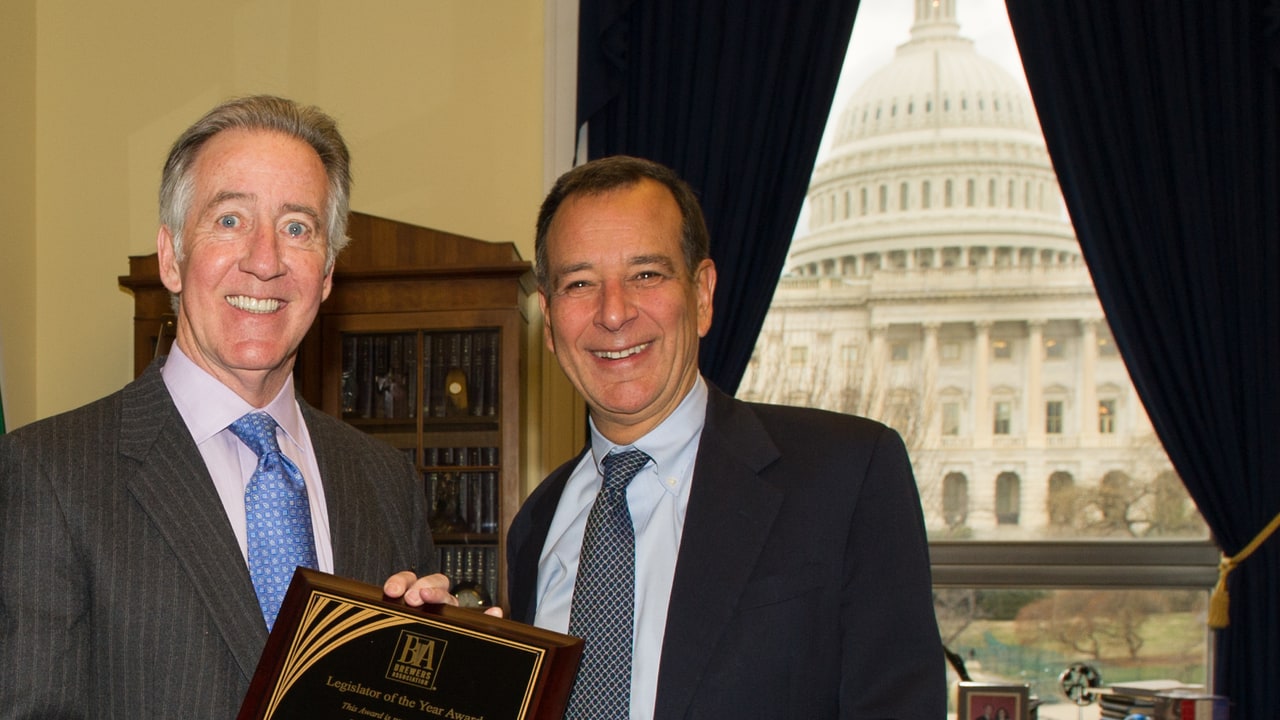
The story in one line
He sold the taste before he paid for the scale.Jim Koch and Rhonda Kallman began with a differentiated family recipe, founder savings, a mortgage and friends-and-family capital. Joseph Owades helped adapt the recipe, while contract production and direct tastings let the founders test the premium domestic beer thesis before owning national infrastructure.
The recipe in the attic
In the spring of 1984, Jim Koch put a business plan on his parents’ kitchen table in Cincinnati. He was thirty-four, leaving Boston Consulting Group, and proposing to enter an industry his father had watched crush regional breweries.
The response, as Koch later reconstructed it in Quench Your Own Thirst, was blunt: “You’ll never succeed. The big guys will eat you alive.” Then Charles Koch led his son upstairs. Beneath old car magazines was a trunk of brewing notes and family recipes. He found an all-malt lager formula from the 1860s and handed it over.
That scene can look like destiny after the fact. It was really a constraint. Koch did not have a working brewery, a distributor or evidence that Americans would pay more for a domestic lager. What he had was a differentiated recipe and a narrow theory: find drinkers who wanted a richer beer rather than fight mass-market brewers on scale.
Turning the inherited formula into a commercial beer required another brewer. In a 2016 NPR interview, Koch said he recruited Dr Joseph Owades, offered him 2 percent of the company, and worked with him to adapt the nineteenth-century recipe for production in a contemporary brewery. Owades then joined Koch at the rented brewery to make the contract-produced beer. The recipe came from the family archive, but the first production method did not come from Koch alone.
His plan defined success modestly. After five years, he expected a small regional company producing 5,000 barrels. The company would pass that mark far sooner. The useful part of the plan was not its forecast. It was the customer it excluded.
More than one person’s money
The familiar shorthand says Koch bet his savings on beer. The fuller record matters. In Fortune’s March 2013 account, he said he committed $100,000 of savings, took a second mortgage, and raised another $140,000 from friends and family. This was not a solo-funded company. The captured origin record identifies no institutional venture capital. It does identify a founder-led round backed by people close enough to bet on him before the market had.
Rhonda Kallman was also there at the beginning. Koch’s book identifies his former BCG assistant as his founding partner; Fortune calls her his first hire and describes her later responsibility for sales and brand development. Any origin story with only one protagonist erases the person whose bartending experience and outgoing sales style complemented Koch’s brewing pitch.
They kept fixed costs low. For the first six months there was no office, desk, computer or company telephone. Koch did not build a brewery first. He arranged production at an existing brewery in Pittsburgh and travelled there to oversee it. Fortune reported that this low-overhead arrangement made the business cash-flow positive from its first month.
That is the financing playbook in its least glamorous form: enough patient personal capital to begin, other people’s money named honestly, and borrowed production capacity instead of a monument.
A cooler against the distribution system
The beer reached Boston in 1985, but local distributors declined to carry it. Koch and Kallman rented a truck and sold it themselves. Koch packed samples and glasses, walked into bars, told the family story and asked bartenders to taste.
The sales problem was specific. Imports occupied the premium position. A domestic case priced above Heineken looked wrong before anyone opened it. Koch could not solve that objection with reach, so he changed the sequence: taste first, category argument second, order last.
Fortune’s account records the comparison customers made at the time: an imported case at $14 against his domestic beer at $20. Those are historical wholesale-era comparisons from Koch’s telling, not current consumer prices. Koch told Fortune that Samuel Adams Boston Lager won at the Great American Beer Festival six weeks after launch. The award gave the bar-by-bar pitch a new proof point, but the demonstration still did the work.
The company expanded the same way, through New England and then Washington, with Koch flying down to sell accounts himself. The method was expensive in founder time and cheap in media. Every sales call doubled as market research: could a drinker taste the distinction the plan claimed existed?
The founder tells the long version
Scale without surrendering the lever
The first year produced about $1 million in revenue, according to Koch’s Fortune account. By 1988, Koch and Kallman were selling 36,000 barrels. Boston Beer opened a brewery in Boston after an earlier construction attempt produced a painful write-off.
In November 1995 the company went public. Koch said the offering let early friends-and-family investors obtain liquidity while a dual-class structure left him with the voting shares. Public capital arrived, but control did not disperse in the usual proportion. The origin and the mature capital structure are different parts of the record.
The structure mattered almost immediately. Anheuser-Busch attacked the company’s contract-brewing arrangements in advertising after the listing. Boston Beer challenged the campaign and survived it. The larger lesson is not that control guarantees good decisions. It is that Koch had designed a company able to choose long-term positioning while public shareholders still had an economic claim.
The origin mechanism also had a limit. Founder selling can establish a category; it cannot distribute millions of barrels. Boston Beer eventually became a multi-brand producer, acquired and built breweries, and used a national wholesaler system. The cooler was a way through the first locked door, not an operating model for the mature company.
What a Samuel Adams costs now
Samuel Adams remains an operating brand in Boston Beer’s portfolio. What a buyer pays depends on the package, licensed seller, deposit, tax and alcohol jurisdiction. That makes a local offer more useful than a single national figure.
| What you are buying | Price | What changes your total |
|---|---|---|
| Samuel Adams packaged beer | Varies | Package, retailer, deposit, tax and alcohol jurisdiction change the shelf total |
| Samuel Adams on premise | Varies | Bars and restaurants set local serving prices |
For the price that applies to you, check the package actually offered by a licensed seller in your jurisdiction.
The small company became a portfolio
Boston Beer’s February 2026 results release describes a company far beyond lager: Samuel Adams alongside Angry Orchard, Dogfish Head, Sun Cruiser, Truly and Twisted Tea. For the year ended in December 2025 it reported $1.965 billion in net revenue, while shipments and depletions fell. Samuel Adams was among the brands contributing to the volume decline.
Koch had reassumed the president and chief executive roles in August 2025 and remained chairman. The current record complicates the triumphal version. The differentiated lager created a national company, but a mature beverage portfolio must keep finding new occasions while its original brand competes in a crowded category it helped create.
The attic recipe was never a moat by itself. The durable mechanism was the chain around it: a product distinction a customer could taste, a founder willing to demonstrate it, low fixed costs while demand was uncertain, and control preserved as the financing changed. That chain can be copied. The inherited recipe cannot.
The 60-second summary
The pattern in one sentence: Koch avoided a scale contest long enough to prove that some American drinkers would pay a premium for flavour, then changed the company’s capital and distribution without giving up voting control.
The playbook, if you want it. Define the customer who values the difference before paying for infrastructure. Borrow capacity while demand is uncertain. Put the product in the buyer’s hands when the category label works against you. Keep every contributor and every source of capital in the origin story. Decide which control rights matter before growth makes that decision expensive.
What you cannot copy. A multigenerational brewing archive, the timing of a nearly empty domestic craft category, and decades of market expansion. Founder-led sampling is also not a universal distribution strategy. It worked here because tasting could overturn the buyer’s belief in minutes.
The dated record, end to end
The plan and the recipe
Koch leaves consulting, assembles founder and friends-and-family capital, begins Boston Beer with Rhonda Kallman, and recruits Joseph Owades to help adapt the family recipe.
Boston Lager reaches bars
With distributors unwilling to carry it, the founders rent a truck and sample directly. Koch’s retained accounts also describe an early Great American Beer Festival award.
The plan is already too small
The founders are selling 36,000 barrels, according to Koch’s book, and the company opens its Boston brewery.
Public capital, retained control
Boston Beer lists on the New York Stock Exchange with two stock classes and Koch retaining the voting shares.
The contract-brewing fight
Anheuser-Busch runs negative advertising about where Samuel Adams is brewed; Boston Beer challenges the campaign.
The founder publishes the record
Flatiron Books releases Quench Your Own Thirst, including the kitchen-table and attic account.
Koch returns to the CEO role
The company’s management record says he reassumes president and chief executive duties.
A large portfolio under pressure
Boston Beer reports full-year net revenue of $1.965 billion and lower shipments and depletions.
Sources and evidence notes
How this edition was reported. The origin was checked against Koch’s published book excerpts, his March 2013 Fortune account, the publisher excerpt carried by Marketplace, his October 2016 NPR interview, an official Talks at Google recording and the company record. Current role and results come from Boston Beer’s investor site. A substantial founder-authored American Heritage essay is also preserved in full in the research packet. The sources were captured locally on August 26, 2026.
What we could not verify
- A universal current retail price for Samuel Adams. Alcohol pricing varies by package, seller, deposit, tax and jurisdiction.
- A successful live Samuel Adams Boston Lager product detail page. The captured URL returned not found, although the brand navigation and Boston Beer’s current portfolio record still identify Samuel Adams as active.
- An exhaustive personal X history. A bounded exact-name, role and site search found no identifiable personal account. Company accounts were excluded. This is an absence finding, not proof that no account has existed.
- A retailer amount from the captured product URL. The retailer returned an anti-bot challenge, so this edition reports the factors a buyer must check rather than an unsupported price.
- An independent Great American Beer Festival award record for the early win described by Koch. The retained Fortune and NPR records carry his account, so the narrative attributes it rather than presenting the festival result as independently captured.
A note on interview verification. The complete NPR audio and a locally derived navigation transcript are retained. The Talks at Google upload metadata gives 5 August 2016, correcting an earlier internal date. Automatic captions were treated as approximate and checked against controlling source records; no reader-visible quotation comes from them.
A note on money. The starting package was not Koch’s money alone. Fortune records savings, a second mortgage and friends-and-family investment. Later the company sold public shares. This edition does not claim that Boston Beer was solo-funded or permanently outside-funded-free.
A note on the image. The hero is a 16:9 editorial crop made from a 4256 by 2832 congressional photograph dated February 5, 2013. The source identifies Congressman Richard Neal as author and marks the U.S. federal-government work public domain in the United States. The crop focuses on Koch and makes no colour or compositing changes. Credit: Congressman Richard Neal; cropped by Streakr.
- Boston Beer management profile, role checked 26 August 2026.
- Fortune, “Jim Koch: Samuel Adams’s beer revolutionary”, 21 March 2013.
- Marketplace publisher excerpt, 31 March 2016.
- Jim Koch, Quench Your Own Thirst, Flatiron Books, published 12 April 2016; publisher excerpt captured locally.
- Boston Beer, full-year results release, 24 February 2026.
- Talks at Google, “Jim Koch: Quench Your Own Thirst,” published 5 August 2016; video and automatic transcript captured locally.
- Wikimedia Commons, original congressional photograph and derived identification page, checked 26 August 2026.
- NPR, How I Built This, “Samuel Adams: Jim Koch,” published 31 October 2016; complete audio retained locally.
- Jim Koch, “Sam Adams or Sacred Cod?”, American Heritage, May 2023; full accessible essay and raw page retained locally.